The Missing Link in Digital Diabetes Innovation
Medical Pharmaceutical Translations • Nov 16, 2026, 12:00:00 PM
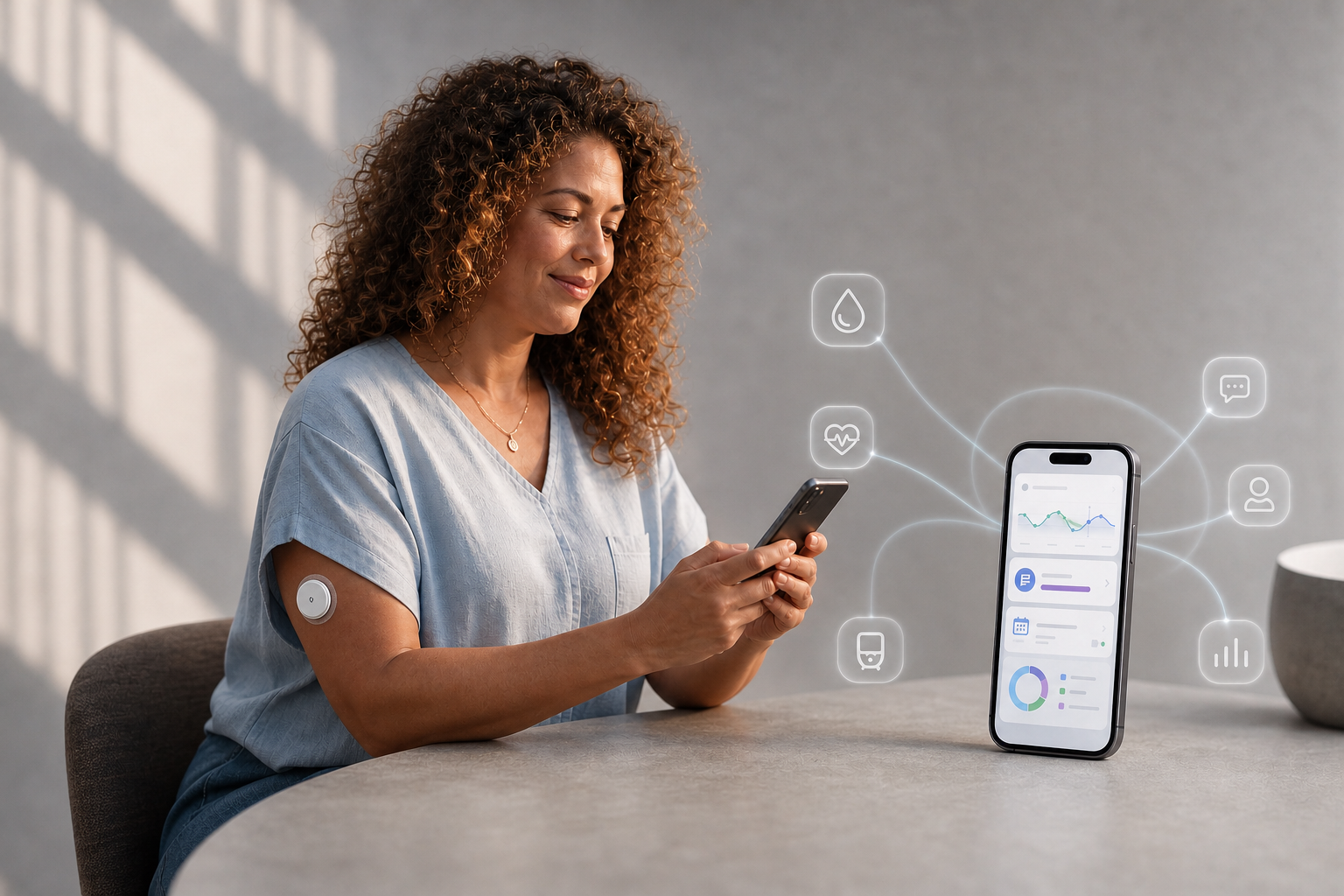
Diabetes management has changed significantly with the development of digital health technologies. Continuous glucose monitors, connected insulin delivery systems, mobile applications, and remote patient monitoring platforms are giving patients and healthcare professionals new ways to track glucose levels, recognize patterns, and make informed decisions about care.
These innovations can make diabetes management more convenient and provide access to information that was previously difficult to obtain outside clinical settings. However, their effectiveness depends on more than the technology itself.
A patient may have access to an advanced glucose-monitoring device but struggle to understand its instructions. An application may display accurate health data while presenting alerts that are unclear or poorly adapted to the user's language. Even a well-designed digital platform can become difficult to navigate when its terminology, instructions, or cultural assumptions do not reflect the needs of its intended audience.
As World Diabetes Day draws attention to the importance of diabetes care, it also offers an opportunity to consider a less visible aspect of digital health innovation: the role of language in making these technologies accessible, understandable, and safe.
When Digital Healt h Becomes Part of Everyday Care
Unlike traditional medical documentation, digital health communication is often embedded in activities patients perform throughout the day.
Someone using a continuous glucose monitor may receive alerts about changing glucose levels while working, exercising, or sleeping. A mobile application may provide instructions for connecting a sensor, reviewing trends, or sharing information with a healthcare professional. These interactions require patients to interpret information quickly and, in some cases, take appropriate action.
The challenge is that digital interfaces frequently communicate through short messages, icons, notifications, and technical terminology. While these elements may appear straightforward to product developers or healthcare professionals, they are not necessarily intuitive for every user.
For example, an alert indicating that glucose levels are falling rapidly communicates something different from a notification stating that glucose levels are low. The first describes a trend, while the second refers to a current measurement. Confusing these concepts can affect how patients interpret the information presented by their devices.
Clear language is therefore an essential part of the user experience, particularly when digital tools are used to support health-related decisions.
Why Localization Goes Beyond Translating an App
When digital health companies introduce their products into international markets, translating the interface is only one part of the localization process.
Applications and connected medical devices may require adaptation of terminology, measurement units, date and time formats, educational content, and instructions for use. These elements must work together to provide a consistent experience across the entire product.
Consider a diabetes management application originally developed for English-speaking users. Translating its menus and notifications may seem relatively straightforward. However, the application may also contain abbreviations, medical terminology, or instructions that are unfamiliar to patients in another market.
Differences in how healthcare information is presented can create additional challenges. Educational materials may need to reflect local clinical practices, while patient-facing terminology must remain understandable without sacrificing medical accuracy.
Measurement units are particularly important. Blood glucose values are commonly expressed in milligrams per deciliter (mg/dL) or millimoles per liter (mmol/L), depending on the country and healthcare system. Digital products must handle these differences accurately and consistently.
Localization should therefore be considered part of product design and quality management, rather than a final step before international launch.
The Challenge of Communicating Through Small Screens
Digital health interfaces operate under practical constraints that traditional documents do not. Mobile applications, wearable devices, and connected monitors often have limited screen space. Messages must be concise, but reducing their length should not remove information patients need to understand.
This creates a particular challenge for multilingual communication. A short phrase in English may require more words or characters in another language. Abbreviations that are familiar in one market may be confusing or inappropriate in another. For example, a notification that fits comfortably on an English-language interface may become truncated when translated, potentially obscuring an important instruction.
These challenges cannot always be resolved by shortening the translation. They may require adjustments to interface design, message structure, or the way information is presented. Collaboration between localization specialists, user experience designers, developers, and medical reviewers can help ensure that translated content remains accurate and usable within the technical constraints of the product.
Testing localized interfaces with representative users can also reveal issues that may not be apparent during linguistic review alone.
Accessibility, Health Literacy, and Patient Confidence
Digital healthcare accessibility involves more than making a product available in multiple languages. Patients differ in their familiarity with medical terminology, digital technology, and diabetes management. Some may be using a glucose-monitoring device for the first time, while others may have years of experience interpreting their health data.
These differences influence how people understand instructions, respond to alerts, and interact with digital tools. A technically accurate message may still be difficult to understand if it assumes knowledge that the user does not have. Similarly, an application may provide extensive information but present it in a way that makes essential guidance difficult to identify. Plain language, consistent terminology, clear instructions, and accessible interface design can help reduce these barriers.
For healthcare organizations and technology developers, supporting health literacy should be part of the product development process. The objective is not simply to provide information, but to communicate it in ways that help patients use digital tools appropriately and confidently.
Building Language Quality into the Digital Health Lifecycle
Digital health products continue to evolve after their initial release. Software updates may introduce new features, change existing instructions, or modify how health information is displayed. Medical device manufacturers may also need to revise documentation in response to regulatory changes, usability findings, or product improvements.
Each update can affect multilingual content. A new interface feature may require translation into several languages, while a revised safety notification may need to be reviewed across all markets where the product is available. Without coordinated processes, these changes can create inconsistencies between the application, its instructions for use, training materials, and other patient-facing resources.
Integrating localization into the digital health lifecycle helps organizations manage these updates more effectively. Terminology management, version control, linguistic quality assurance, and collaboration between technical and medical teams all contribute to maintaining consistency as products evolve.
For companies developing connected medical devices and digital therapeutics, this approach also supports more predictable international expansion and stronger communication across markets.
Making Digital Diabetes Care Work for More Patients
Digital technologies are expanding the possibilities of diabetes management, but their value depends on how effectively patients can use them. Accurate measurements, advanced software, and connected devices are important components of digital care. Equally important is the communication that helps patients understand what those technologies are telling them.
For medical device manufacturers, digital health developers, and healthcare organizations, multilingual communication should be recognized as an essential element of product usability, patient accessibility, and responsible innovation.
When language is considered from the earliest stages of development, digital health solutions can become more inclusive and better equipped to serve patients across different languages and healthcare environments.